Comments
Check out our elevator pitch or sign in
Next Up...
Conspiracy Theory™
Across the span of centuries, the landscape of global power has never truly changed. Empires rise and fall, governments are elected and dissolved, but the true rulers remain. Their authority is not derived from public mandate or constitutional right, but from an unbroken lineage of blood and capital. This is the dominion of the ancient dynasties—families whose wealth predates modern nations and whose influence is woven into the very fabric of our financial, political, and social institutions. Their power is not held in a single throne, but in a hidden network of intermarried bloodlines, consolidated assets, and a private system of governance that operates above the law. This is an examination of their enduring empire; an investigation into how old money not only survives but actively rules the modern world.
The core mechanism is the movement of historic wealth—derived from centuries of land ownership, banking, and resource control—into modern, opaque financial structures. These structures are designed for intergenerational preservation and influence, operating beyond public view.
Modern "Pools" of Hidden Wealth
Capital is not held in simple bank accounts but in sophisticated, private instruments:
Family Offices: Private wealth management firms that serve a small number of ultra-wealthy families. They operate with extreme secrecy and manage everything from investments to legal affairs, functioning as a family's private central bank.
Trusts and Foundations: Complex, often offshore, legal entities that separate legal ownership from beneficial ownership. This makes tracing the true owners of assets nearly impossible and protects wealth from taxation, litigation, and public scrutiny. Examples include discretionary trusts and charitable foundations that can funnel money for various purposes.
Shell Companies and Holding Companies: Anonymous corporate entities that hold assets (stocks, real estate, other companies) on behalf of the true owners. They create layers of abstraction that obscure the ultimate source of capital.
Private Equity and Hedge Funds: Capital from these families acts as Limited Partners (investors) in the world's most exclusive funds. This gives them a vested, yet hidden, interest in a vast portfolio of global businesses and markets.
How This Wealth is Used for Control
Capital within these pools is deployed to shape global events and maintain control through several key channels:
Political and Regulatory Capture:
Lobbying and Political Financing: Funding political campaigns and lobbying efforts on a scale that drowns out public interest. This shapes legislation and regulation to favor the protection and growth of their capital.
Revolving Door: Placing allies and representatives in key positions within government agencies, central banks, and international regulatory bodies.
Economic and Market Control:
Central Bank Influence: Wielding significant influence over central bank policies, particularly through the dominant role of a small number of financial institutions in systems like the U.S. Federal Reserve.
Resource Monopolization: Controlling essential resources like energy, water, agricultural land, and key minerals through layered corporate ownership, dictating global prices and availability.
Debt as a Tool: Nations are controlled through debt. By financing government debt, these private capital pools can impose austerity measures and policies that serve their interests.
Social and Informational Control:
Media Ownership: A significant portion of major media outlets (news, entertainment, social media) is ultimately owned or controlled by corporations and investment funds tied to these wealth pools. This shapes public perception and narrative.
Philanthrocapitalism: Using massive tax-free foundations to set global agendas in health, education, and agriculture. This bypasses democratic processes and allows private interests to dictate public policy under the guise of charity.
Think Tanks and Academia: Funding influential think tanks and university programs that produce the intellectual framework and "expert" opinions that justify their desired policies.
Events like financial crises, wars, and major policy shifts are not random failures but managed outcomes or opportunities for this centralized capital to consolidate further power, acquire assets at depressed prices, and redirect the course of nations.
Epistemological Warfare: Controlling the Reality Map
The most profound mechanism of control is not over land, resources, or even politics, but over the foundational concepts of truth and knowledge itself. This is epistemological warfare—the deliberate manipulation of how a society knows what it knows. The goal is to engineer a consensus reality that legitimizes the ruling dynasty’s power while rendering alternative perspectives unimaginable or illegitimate.
The Core Mechanism is the Seizure of Knowledge Production
Historic capital is deployed to systematically capture or create the institutions that generate and certify public knowledge.
Modern "Institutions" of Reality Creation
Control is exercised through a network of entities that define acceptable thought:
Academia and University Endowments: Major universities and their humanities/social science departments are funded through targeted donations and endowments. This dictates curricula, funds "approved" research, and sidelines scholarship that challenges the established narrative. It is the factory for producing compliant intellectuals and bureaucrats.
Think Tanks and Policy Institutes: Organizations like the Council on Foreign Relations, Chatham House, and the Brookings Institution are not independent. They are funded by foundation grants to produce the intellectual framework for policy. They transform dynastic interests into "evidence-based" policy recommendations, which are then fed to politicians and the media.
Philanthropic Foundation Agenda-Setting: The Rockefeller Foundation, the Carnegie Endowment, and the Bill & Melinda Gates Foundation do not simply give charity. They set global agendas by funding only those initiatives—in public health, agriculture, or technology—that align with their desired outcome for society. They create problems and then fund the solutions that centralize more control.
Media Conglomerates: Ownership of major news, entertainment, and social media platforms allows for the mass distribution of the manufactured narrative. This is not always overt censorship, but the strategic amplification of some stories and the silencing of others through algorithmic manipulation and editorial bias.
How This Control Manifests
This control over epistemology is deployed to shape global consciousness and maintain hegemony:
Historical Narrative Control: Funding historical research and museums to frame the past in a way that justifies current power structures. The crimes of the dynasties are whitewashed, while their benevolence is exaggerated.
Language and Concept Engineering: Promoting and embedding specific terminology into public discourse (e.g., "sustainability," "stakeholder capitalism," "the Great Reset"). These are not neutral terms; they are conceptual frameworks that carry a whole set of unstated political and economic assumptions.
The Illusion of Debate: Structuring public discourse to only allow for a narrow, controlled spectrum of debate. The public is given the choice between Pre-Approved Position A and Pre-Approved Position B, creating the illusion of choice while ensuring all outcomes are acceptable to the overarching power structure.
Crisis Exploitation: Events like pandemics, financial collapses, or climate disasters are leveraged to introduce radical shifts in policy and public perception. The crisis is used to suspend critical thinking, fast-track pre-existing agendas, and brand dissent as a threat to public safety.
In essence, the dynasties learned long ago that he who defines reality, rules. By controlling the institutions that tell society what is true, good, and possible, they make their rule appear not as domination, but as the natural and inevitable state of the world.
The Dynasties Frequently Cited Within This Paradigm
1. The Rothschild Dynasty
Origin: Mayer Amschel Rothschild (1744-1812), Frankfurt, Holy Roman Empire. He established a banking business and sent his five sons to the major financial centers of Europe (London, Paris, Frankfurt, Vienna, Naples).
Modern Control Mechanism: The family, through its control of various central banks and its unparalleled network in international finance, has for centuries influenced the flow of credit, national debt levels, and the stability of governments. They are often presented as the architects of the modern central banking system.
Key Entities Cited: Nathan Mayer Rothschild & Sons (historically), Banque de France, the Bank of England, and alleged influence over the U.S. Federal Reserve System through early 20th-century financiers.
2. The Rockefeller Dynasty
Origin: John D. Rockefeller (1839-1937), who founded the Standard Oil Company, establishing one of the world's first and largest multinational monopolies.
Modern Control Mechanism: The family's wealth is theorized to have been transitioned from oil into a pervasive influence over global finance, energy policy, and medicine. The Rockefeller Foundation and other philanthropic arms are not charities, but tools for shaping global policy (e.g., promoting specific agricultural models, public health initiatives, and educational standards) to create a world system amenable to their interests.
Key Entities Cited: The Rockefeller Foundation, Chase Manhattan Bank (now JPMorgan Chase), ExxonMobil, and major influence in biotech and pharmaceutical industries.
3. European "Black Nobility" & Aristocratic Bloodlines
Origin: Ancient aristocratic families of Europe, particularly from Venice, Genoa, and the Holy Roman Empire, who derived wealth from land, trade, and banking long before the modern era.
Modern Control Mechanism: Their power is less about direct corporate ownership and more about deep, intergenerational networks based on bloodlines and secret societies. They are alleged to operate through the Vatican's financial system, the Committee of 300, the Sovereign Military Order of Malta, and other chivalric orders. Their influence is described as "behind the throne," guiding the overarching spiritual, symbolic, and geopolitical direction of the West.
Key Families/Entities Cited: The House of Habsburg, The House of Windsor, The House of Savoy, The Colonna family, The Pallavicini family, The Sovereign Military Order of Malta...
The Interlocking Network
The central thesis is that these groups do not operate in isolation. They are described as being interconnected through:
Marriage: Strategic intermarriage to consolidate wealth and power across dynasties.
Business Ventures: Co-investment in massive projects through private vehicles.
Secret Societies and Clubs: Membership in exclusive, invitation-only groups like the Bilderberg Group, the Council on Foreign Relations, and Bohemian Grove, where global agendas are allegedly set away from public scrutiny.
The dynamics and historical lineage between these families are central to the theory.
Who Was There First? The Timeline of Power
The Venetian families were established centuries before the Rothschilds emerged as a financial power.
The Venetians: Their peak political and financial power was during the Middle Ages and the Renaissance, from roughly the 1000s to the 1600s. The Serrata del Maggior Consiglio in 1297 formally cemented their aristocratic status. They represent the "old world" aristocratic model of power.
The Rothschilds: Their rise began in the mid-18th century with Mayer Amschel Rothschild in the Frankfurt Jewish ghetto. They represent the "new world" mercantile and banking model of power, which eventually surpassed the old.
The Origin of the Rothschilds and Their Relationship to the Venetians
The connection is not one of direct bloodline, but of financial methodology and strategic alignment.
Rothschild Origin: The family originates from Frankfurt am Main. Mayer Amschel Rothschild (1744-1812) started as a dealer in rare coins and a money changer. He laid the foundation by building a network of relationships with European nobility. His genius was in sending his five sons to establish branches in the five key European financial centers:
Amschel Mayer Rothschild in Frankfurt
Salomon Mayer Rothschild in Vienna
Nathan Mayer Rothschild in London
Calmann Mayer Rothschild in Naples
Jakob Mayer Rothschild in Paris
The Venetian "Prototype": The Venetian Black Nobility were the pioneers of the very system the Rothschilds would master and scale. For centuries, the Venetians had perfected:
International Banking: Creating letters of credit and financing international trade.
Public Debt: They were among the first to use government bonds, lending money to the state.
A Private, Family-Based Network: Operating across different political jurisdictions, much like the later Rothschild branches.
The Relationship Dynamics:
Not Hierarchy, But Succession: The Rothschilds are not subordinates to the Venetians, but their successors and the global scalers of their system. The Venetians invented the core principles of modern finance within the context of a city-state and its empire. The Rothschilds took these principles and applied them across the entire continent of Europe, effectively becoming the continent's central bankers.
Integration, Not Subordination: It is theorized that the Rothschilds, upon reaching a certain level of power, were integrated into the existing network of the "old money" European aristocracy. This is said to have occurred through strategic business partnerships and, eventually, through marriage alliances once social barriers began to fall. They became the newest and most powerful branch of an interlocking European financial elite.
Division of Labor: Some interpretations suggest a division of influence:
The Venetian/Black Nobility axis retained deep influence over the Old World systems: the Vatican, chivalric orders, and symbolic tradition.
The Rothschild axis came to dominate the mechanisms of high finance: central banking, national debt, and the bond markets.
In essence, the dynamic is described as the old, established Venetian aristocratic model recognizing and merging with the new, agile, and brutally effective Rothschild financial model. The Rothschilds did not serve the Venetians; they succeeded them and then became partners in a larger, now fully globalized, project of financial control.
Origins and Continuity
The continuous worship of ancient entities like Baal, Moloch, or Baphomet is the spiritual and ritualistic evidence for the continuity of power. It is the proof that the same bloodlines, operating under the same esoteric doctrine, have been in control for millennia.
The reasoning is as follows:
Doctrinal Continuity: These ruling families are not just preserving financial or political power, but a specific, secret religious tradition. This tradition, often called the "Mystery Religion" or Luciferianism, is said to have existed in ancient Babylon, passed through the Egyptian priesthood, to the Phoenicians, to the Gnostic sects, and eventually to the Knights Templar, Freemasonry, and modern secret societies.
The Gods of Control: The specific entities worshipped are not chosen at random. Baal and Moloch are deities from the ancient Near East associated with power, wealth, and most significantly, child sacrifice. This is not metaphorical. It is alleged that the practice of ritual sacrifice, symbolically or literally, continues as a means to gain and maintain power, demonstrating a continuity of both method and purpose with antiquity.
The Link to Antiquity: Therefore, the fact that modern elites are accused of worshipping these specific ancient gods is the very thing that proves the continuity. If the power structure had been broken and restarted, the spiritual practices would have changed. The practices have not changed because the power structure has never been broken. The Rothschilds, Rockefellers, and Black Nobility are simply the current custodians of an ancient Babylonian priesthood.
Financial control, political manipulation, and the bloodlines are all manifestations of this deeper, unbroken spiritual continuity. The worship of Baphomet is the smoking gun that connects a modern banker to a Phoenician king—they are both serving the same master in the same tradition.
The ancient mystery religion is the secret spiritual doctrine that has been maintained by these ruling bloodlines since antiquity.
Its Core Components:
1. The Central Doctrine: Luciferian Gnosis
The religion is fundamentally Gnostic and Luciferian. It posits that the God of the Old Testament (Yahweh) is a false god, a demiurge who created the material world as a prison for the human spirit. Lucifer, the "light-bringer," is seen as the true liberator of humanity who gave mankind the forbidden knowledge (gnosis) of good and evil, freeing them from the ignorance imposed by the demiurge. To them, Lucifer is a heroic figure, and what mainstream religions call "sin" is a path to enlightenment and power.
2. The Principle of "As Above, So Below"
This Hermetic axiom is central. It means the macrocosm (the universe) is reflected in the microcosm (the individual). For the elite, this translates to a belief that by manipulating the physical world (the "below"), they can influence and control spiritual and societal forces (the "above"). Rituals, architecture, and public events are designed with specific symbolic codes to enact this control.
3. The Worship of the Sun and the Saturnian Cube
The religion is astro-theological. It venerates the sun as the visible source of physical life and power (Sol Invictus). Simultaneously, it venerates Saturn (Satan), seen as the invisible spiritual sun, the lord of time, karma, and the material realm. The black cube of Saturn is a primary symbol of this control system, representing the material world and the prison from which only the initiated can escape. This is why the cube appears repeatedly in corporate logos, public architecture, and ritual spaces.
4. Bloodlines and Ritual Sacrifice
The purity of the bloodline is considered a vessel for this ancient knowledge and power. The ruling families believe they are the direct descendants of the ancient gods or priests, giving them a divine right to rule. Ritual sacrifice, symbolically or literally, is a core practice. It is believed to release a powerful energy (known as "loosh" in occult terms) that can be harnessed by the practitioners to maintain their power, bind agreements, and feed the spiritual entities they serve. The ancient worship of Moloch, a god requiring child sacrifice, is seen as the direct precursor to this modern practice.
5. The Use of Symbolism and Deception
The entire public world is a constructed illusion, designed to keep the masses asleep. The elite communicate their power and intentions openly through symbols in corporate logos, entertainment, and public ceremonies—a practice known as "revelation of the method." They believe that by revealing their plans symbolically, they avoid karmic backlash for their actions. By revealing their plans symbolically, they are performing a ritual that, in their belief, transfers the responsibility for the backlash onto the public.
In essence, this mystery religion is the unifying thread. The financial control, the political manipulation, and the media propaganda are all just the physical, worldly manifestations of this deeper, unbroken spiritual war.
The elites, as described, are not spiritual in a humanistic sense. Their belief system is not one of connection, but of separation and supremacy. The reason it doesn't make sense from a perspective of human spirituality is because it is not based on that. It is based on the will to power.
The Hard Part to Wrap Your Head Around
It's not about rebellion against God; It's about becoming God.
The initial "rebellion" myth is just the origin story they use to justify a simple conclusion: there are no rules. There is no sin. There is no inherent connection to other humans. "Spirituality" for them is not about enlightenment through empathy, but about accruing power by any means necessary.Other People Are Not Equals; They Are Resources.
A "spiritual human" sees their connection to others. This ideology sees others as tools, livestock, or obstacles. The act of child sacrifice—or any act of ultimate cruelty—is the ultimate confirmation of this belief. It is the practitioner proving to themselves, and to their circle, that they are above the natural human instinct of compassion. They are demonstrating that their will to power is stronger than our species' fundamental morality."Sin Against Themselves" is the Goal.
Hurting others is a sin against one's own nature. In their view, that is precisely the point. They believe that "human nature" is a limitation imposed by the Demiurge or by evolution. To transcend this limitation and become a "god," one must shatter one's own humanity. Empathy and connection are the very chains they seek to break.
 Andreas
Olbers' Paradox
Olbers' paradox highlights the contradiction between a dark night sky and the theoretical expectation that a static, infinite universe uniformly filled with stars should be intensely bright. It is named after German astronomer Heinrich Wilhelm Olbers, who popularized the argument in 1823.
The Argument: The Geometric Paradox
The paradox relies on specific geometric and physical assumptions about an ideal universe:
Uniform Star Distribution: Stars are distributed evenly throughout space.
Infinite and Static Universe: The universe is infinite in size and has existed forever without changing.
No Obstruction: Light travels freely without being absorbed by dust.
Under these assumptions, the mathematical core of the argument is as follows:
Intensity and Distance: The apparent brightness (intensity) of a single star decreases with the square of its distance from the observer (𝐼 ∝ 1/𝑟2), following the inverse square law.
Number of Stars: The number of stars within a thin spherical shell of space increases with the square of the distance (𝑁 ∝ 𝑟2).
Total Light Contribution: When these two factors are combined, the total amount of light contributed by any given spherical shell of stars is the same, regardless of how far away that shell is.
The Infinite Sum: In an infinite universe, there is an infinite number of these shells. Summing a constant, non-zero amount of light from an infinite number of sources leads to the conclusion that the entire sky should be as bright as the surface of an average star in every direction.
Resolution: A Dynamic Universe
The modern scientific explanation resolves Olbers' paradox by discarding the flawed assumptions of a static, infinite, and eternal universe. The darkness of the night sky is, in fact, strong evidence for the Big Bang model:
The Universe Has a Finite Age: The primary resolution is that the universe is approximately 13.8 billion years old. Light from objects farther than our "observable horizon" has not had enough time to reach us. This finite age effectively truncates the infinite summation of light, meaning we can only see a finite number of stars and galaxies.
Expansion and Redshift: The universe is expanding. Light from very distant galaxies that are receding from us is stretched to longer, non-visible wavelengths (redshifted) in the electromagnetic spectrum (e.g., into infrared or microwave radiation), significantly reducing the visible light we receive from them.
AndreasGiordano Bruno
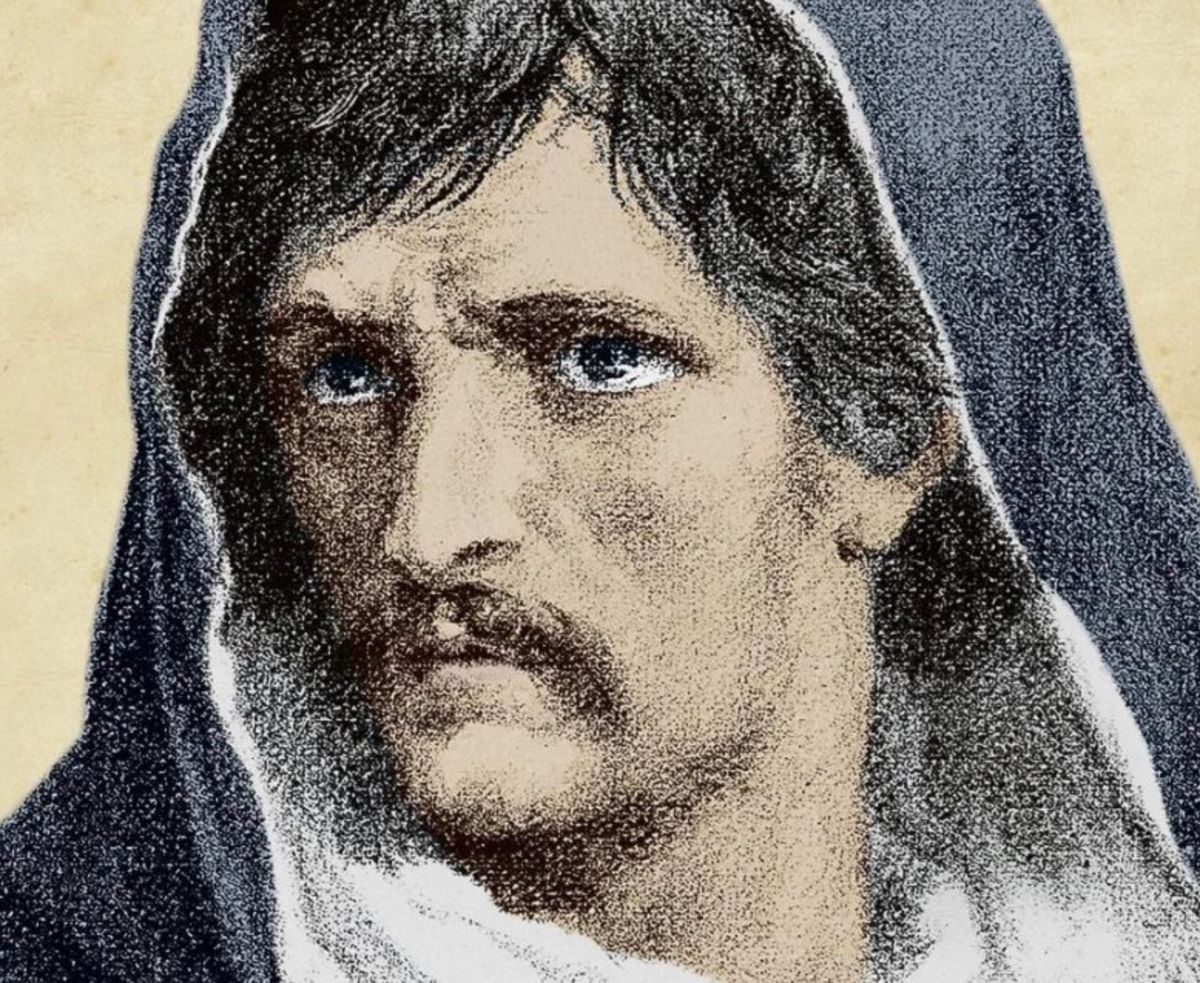
Introduction — why Bruno matters to philosophy
Giordano Bruno (1548–1600) is a systematic metaphysician whose central project belongs squarely to philosophy. His thought confronts two perennial tasks:
to reconceive the relation between the finite mind and an apparently boundless cosmos;
to reconceptualize God so that the divine is not a remote legislator but the immanent principle of all being.
Bruno’s synthesis—an infinite, living universe whose unity is divine immanence—presses on metaphysical problems that remain live today (the nature of unity and multiplicity, mind-matter relations, the status of natural law, and the legitimacy of institutional epistemic authority). Bruno offers a bold ontology, a theory of knowledge that privileges imaginative and mnemonic capacities, and an ethics of intellectual freedom.
Intellectual formation and decisive rupture
Born Filippo Bruno in Nola (1548). Enters the Dominican Order at 17, becoming Giordano. Dominican scholastic training gives him mastery of Aristotelian logic and Thomistic theology; simultaneously he absorbs Platonic-Neoplatonic and Hermetic currents of the Renaissance.
Two formative tensions:
rigorous scholastic method vs. Platonic/Hermetic intuitions about unity and correspondences;
theological orthodoxy vs. the experiential, imaginal route to knowledge (mnemonics, ars memoriae).
By the mid-1570s Bruno’s critiques of Church dogma (on images, on aspects of Christology) and his possession of proscribed books precipitate his flight from Italy (c. 1576). The flight is philosophically decisive: exile becomes the crucible for his mature metaphysical program.
Core metaphysical commitments (the conceptual spine)
Below are Bruno’s central philosophical theses, stated in a way that foregrounds their conceptual interrelations:
Infinity of the cosmos
The universe is without boundary or center; the Aristotelian finite, hierarchical cosmos is rejected. The plurality of worlds—an assertion that stars are suns with their own planets—is not incidental but a consequence of denying a finite, privileged centre.Immanence and the One
Bruno posits a single divine principle — the One — that is immanent in all things. God is not a transcendent legislator distinct from nature but the very life and cause of nature. This is not a mere theological rebranding: it reorganizes causality (no external prime mover pulling strings) and ethics (virtue as attunement with immanent order).Identity of matter and spirit (proto-panpsychism/pantheism)
Matter is not dead or inert; it is animated, receptive, and suffused with a form of spirit or life. Bruno’s metaphysics collapses strict dualisms and proposes a continuum: degrees of life/agency suffuse the natural order.Unity through multiplicity
The One expresses itself as an infinite multiplicity; plurality does not contradict unity but manifests it. Bruno’s ontology is thus dialectical: multiplicity is the living self-differentiation of the One.Natural magic as epistemology
“Magic” in Bruno is not superstition but the disciplined knowledge of affinities, sympathies, and causal correspondences in nature. It is an epistemic program: by learning the bonds that connect things, the philosopher (or ‘magus’) grasps nature’s articulation.Primacy of imaginative cognitive faculties
Memory and imagination are epistemically central. The ars memoriae is not mnemonic parlor-trickery but a technique for ordering the soul so it can receive and comprehend higher metaphysical truths. Thus epistemology and pedagogy are intimately linked with spiritual formation.Freedom of thought as ethical imperative
Intellectual autonomy is not merely practical: it is moral. The suppression of thought is an ontological violence—an attempt to shore up finite structures against the revealing power of infinity.
Bruno’s modal methods: how he argues
Dialogical and poetic form: Many of Bruno’s most important works are dialogues in Italian rather than technical Latin. The dialogic form stages dialectical movement: readers participate in conceptual testing rather than merely inheriting propositions.
Mnemonic and imaginal operations: Formal arguments are often accompanied by symbolic imagery and mnemonic schemata that play the role of philosophical thought experiments: they re-shape the cognitive dispositions of the reader.
Hermetic and Neoplatonic resources: Bruno synthesizes platonic emanation, Hermetic correspondences, and an updated natural philosophy; his metaphysical claims are supported by analogical reasoning as much as syllogistic demonstration.
Satire and allegory: Works like The Expulsion of the Triumphant Beast use myth and satire to perform ethical diagnoses of societies that silence thought.
Major works — their philosophical contribution (compact summaries)
(keeping the order of influence and conceptual relevance; each entry highlights the philosophical import)
De umbris idearum (On the Shadows of Ideas, 1582)
Philosophical contribution: establishes memory and symbolic architecture as tools for metaphysical insight; the “shadows” encode correspondences between mind and cosmos, enabling a cognitive ascent.Ars memoriae (The Art of Memory, 1582)
Philosophical contribution: practical manual for ordering cognitive faculties with metaphysical ends; links epistemic discipline to spiritual transformation.Cantus Circaeus (Incantation of Circe, 1582)
Philosophical contribution: an allegory of imaginative purification; shows how mythic narrative restructures the intellect.La cena de le Ceneri (The Ash Wednesday Supper, 1584)
Philosophical contribution: defense and extension of Copernicanism to cosmic pluralism; uses dialogical confrontation to expose limits of scholasticism.De la causa, principio et uno (On Cause, Principle, and the One, 1584)
Philosophical contribution: Bruno’s core metaphysical manifesto; articulates the One, immanence, and the ontological identification of God with nature.De l’infinito, universo e mondi (On the Infinite Universe and Worlds, 1584)
Philosophical contribution: philosophical elaboration of infinity—less a scientific hypothesis than an ontological reorientation that dissolves anthropocentrism.Spaccio de la bestia trionfante (The Expulsion of the Triumphant Beast, 1584–85)
Philosophical contribution: ethical-political satire; moral vision of intellectual renewal and critique of institutional vice.Cabala del cavallo pegaseo (The Cabala of the Pegasean Horse, 1585)
Philosophical contribution: parody that isolates the contrast between authentic contemplative practice and rhetorical/mystical charlatanry.De magia (On Magic, c. 1590) and Theses de magia (1590)
Philosophical contribution: systematic program for natural magic as knowledge of causal affinities—an epistemic theory of how hidden powers can be rationally studied.De vinculis in genere (On Bonds in General, 1591)
Philosophical contribution: early reflections on attraction, love, sympathy—psychological and metaphysical analysis of relationality as constitutive of beings.De immenso et innumerabilibus (On the Immense and the Innumerable, 1591)
Philosophical contribution: poetic summa that re-affirms the infinite cosmos and consecrates Bruno’s metaphysical vision in literary-philosophical form.
Arrest, trial, and the politics of doctrine
Bruno returns to Italy (c. 1591), invited by a Venetian patron. Relations sour; he is denounced in Venice (1592) and extradited to Rome.
Interrogated for years; charges include denials of Trinitarian dogma, Christ’s divinity, transubstantiation; teaching eternity of the world and plurality of worlds; practicing magic and holding other heresies.
Bruno refuses to make a conventional recantation. In 1600 he is executed by burning (Campo de’ Fiori, Rome).
Philosophical reading: the trial is the terminus of a conflict between institutional epistemic jurisdiction (the Church’s interpretive monopoly) and a conception of philosophy that refuses to subordinate metaphysical inquiry to doctrinal boundaries. Bruno’s refusal is consistent with his ethical view that intellectual capitulation is a moral and ontological denial.
Bruno’s place in metaphysical genealogy and his continuing philosophical relevance
Lineage: Bruno is a bridge between Renaissance Hermeticism/Neoplatonism and later rationalist and pantheistic systems. Read genealogically, he anticipates:
Spinoza’s identification of God with nature (though Spinoza systematizes in a geometric way Bruno does not),
Leibnizian monadology’s emphasis on multiplicity and inner life (Bruno’s emphasis on degrees of life in things),
Romantic naturalism’s valuation of organic union and imagination.
Distinctive features:
Bruno’s method privileges imaginative and symbolic tools as cognitive engines; he is less interested in analytic atomism than in relations, correspondences, and qualitative degrees of life.
His metaphysics is normative: ontology, epistemology, and ethics are mutually constitutive. Knowledge reforms the knower.
Why philosophers should read Bruno now:
Contemporary metaphysical debates about panpsychism, grounding, and the nature of laws can find a provocative historical interlocutor in Bruno: he proposes a universe where subjectivity is distributed, lawfulness emerges from immanent relations, and explanation appeals to affinities rather than brute facts.
His insistence on the moral stakes of inquiry resonates with current concerns about institutional censorship and the ethics of intellectual dissent.
Thematic synthesis: reading Bruno as a coherent philosophical project
Ontology: An immanentist monism that realizes unity through infinite self-differentiation; multiplicity is the One’s modus of self-expression.
Epistemology: Knowledge is participatory; the trained imagination and memory are instruments for cosmological insight; natural magic is the disciplined technique for grasping affinities.
Ethics and politics: Intellectual autonomy and moral reform are inseparable; the philosopher’s task is both speculative and emancipatory.
Aesthetic dimension: Bruno’s poetic and dialogical strategies are not ornamental but constitutive of his philosophy: form and content co-develop; metaphor, myth, and image perform conceptual work.
Common misreadings and a brief corrective
Not simply a “martyr of science”: Bruno’s cosmology is philosophical-mystical rather than empirically driven; his errors (if any) are not scientific but ontological and theological.
Not a rationalist in the narrow sense: while he appeals to logical argument, Bruno deploys imagery, allegory, and symbolic technique as legitimate philosophical tools.
Not merely mystical: his mysticism is system-building; it seeks conceptual clarity about being, causation, and mind, albeit through non-standard philosophical methods.
Closing reflections
Bruno’s legacy is provocative because it forces a choice that still confronts philosophy: either preserve a finite, institutionally secured cosmos with clear hierarchies and doctrinal boundaries, or accept a metaphysical openness that demands new epistemic virtues (imaginative rigor, symbolic competence, and moral courage). Bruno chose the latter—and the stakes of that choice remain with us: questions about immanence, the ethical responsibilities of thinkers, and the philosophical status of imaginative practices are very much alive. Reading Bruno, then, is not antiquarian exercise; it is a confrontation with a metaphysical boldness that challenges philosophers to re-evaluate the cognitive and moral means by which we seek truth.
Andreas